From Solopreneur to Entrepreneur: How Leadership Coaching Accelerates Business Growth
The Leadership Shift Every Growing Founder Must Make

Many successful companies begin with a single founder wearing multiple hats - strategist, marketer, operator, and customer support all at once.
In many early-stage businesses, this level of involvement feels natural because the founder understands every part of the operation.
However, as the business grows, technical expertise alone is no longer enough to sustain momentum. The transition from solopreneur to entrepreneur requires a shift in how founders think and lead. This is where a structured leadership coaching approach becomes essential, helping business owners evolve from hands-on operators into strategic leaders who can build scalable teams, make high-impact decisions, and drive sustainable growth.
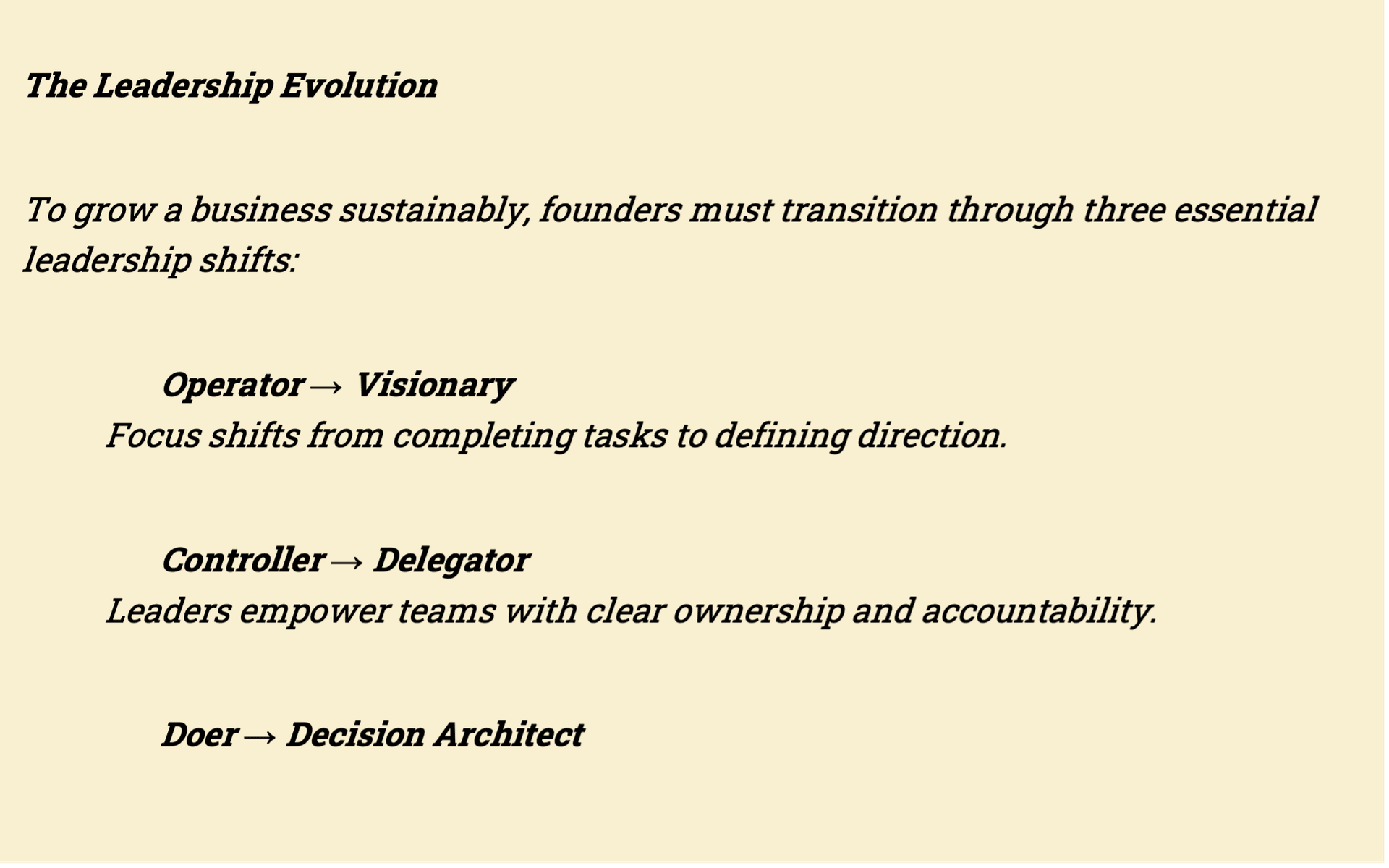
Instead of focusing primarily on daily operations, founders must begin building systems, empowering teams, and shaping the long-term direction of the business.
As the company expands, business coaching can also support founders in developing scalable systems and strengthening the leadership capabilities needed to sustain long-term growth.
Why Business Growth Demands a New Leadership Style?
During the solopreneur stage, founders often manage nearly every decision themselves. While this approach works in the early phase of a business, it quickly becomes unsustainable as the company expands.
A growing business requires a shift from operational management toward a more strategic leadership approach.
According to research published by Harvard Business Review, founders who fail to transition from operational control to strategic leadership often struggle to scale beyond the early stages of growth.
Successful entrepreneurs learn to:
● Focus on long-term direction rather than daily operations
● Empower teams to take ownership of responsibilities
● Build systems that allow the business to grow beyond the founder’s personal capacity
This leadership evolution is essential for sustainable business growth.
Building Systems and Teams That Scale
A growing business cannot rely solely on the founder’s effort. Instead, it needs systems, processes, and a capable team that can support continued expansion.
Entrepreneurs who successfully scale their companies often focus on building infrastructure that supports growth. Examples include:
● Project management systems
● Customer relationship management (CRM) tools
● Standard operating procedures
● Clear team accountability structures
Technology also plays an important role in supporting these systems. Automation tools and digital platforms can reduce repetitive work and allow founders to focus more on strategic decisions.

Delegation Framework
Delegation is one of the most critical leadership skills entrepreneurs must develop.
Many solopreneurs hesitate to delegate because they worry about losing control or compromising quality. In reality, refusing to delegate eventually limits the growth potential of the business.
An effective delegation framework includes:
● Clearly defined outcomes
● Assigned ownership for tasks
● Decision boundaries for team members
● Trust in employees to execute their responsibilities
When delegation is implemented effectively, leaders free up valuable time to focus on strategic planning and business development.
Decision-Making Model
As organizations grow, decision-making naturally becomes more complex. Many founders discover that decisions which once took minutes can begin to involve multiple stakeholders and competing priorities.
To manage this complexity, leaders often need a structured decision-making process that helps teams operate more efficiently.
A clear decision-making model may include:
● Defined leadership roles
● Regular strategic meetings
● Data-based performance dashboards
● Clear accountability for decisions
According to McKinsey & Company, organizations with structured decision-making systems tend to outperform competitors in long-term growth and operational efficiency.
Common Growth Challenges and How to Overcome Them
The journey from solopreneur to entrepreneur often brings unexpected challenges. As the business grows, leadership responsibilities become more complex as well.
Some common growth challenges include:
Decision overload
Founders may become the central decision-maker for nearly every issue, which can slow down progress.
Team misalignment
Without clear leadership direction, teams may move in different directions.
Operational distraction
Daily operational tasks can consume valuable time that would otherwise be spent on strategic thinking.
Many founders also experience what is often called the founder bottleneck, where too many decisions depend on a single person. Without clear systems and organizational structure, business growth can quickly stall.
As teams grow and operations become more complex, expanding leadership capacity becomes increasingly important.
Recognizing these challenges is the first step toward addressing them. Entrepreneurs who develop strong leadership systems and strategic thinking skills are typically better prepared to navigate these obstacles.
When to Consider Business Coaching Support
At certain stages of business growth, founders may benefit from gaining external perspective. Many entrepreneurs explore business coaching for growing founders to gain strategic clarity, strengthen leadership systems, and build structures that support long-term scalability.
Business Coaching can support entrepreneurs in several areas:
Scaling systems
Helping founders build operational structures that support long-term growth.
Strategic clarity
Providing frameworks that help leaders focus on high-impact decisions.
Accountability structure
Creating leadership routines and accountability systems that encourage consistent progress.
For many entrepreneurs, coaching also provides a structured environment to reflect on leadership decisions and strengthen their ability to guide a growing organization.
Key Reflection for Founders
If your business is entering a new growth phase, it may be helpful to reflect on your leadership approach.
Ask yourself:
● Am I building a business that depends entirely on me?
● Or a business that can grow beyond my direct involvement?
● Am I leading strategically, or reacting to operational demands?
These questions can help founders identify whether their leadership style supports long-term growth.
Ready to Elevate Your Leadership?
Scaling a business rarely happens through hard work alone. It requires leaders who can think strategically, empower teams, and create systems that support sustainable growth.
If you’re leading a growing team and finding it increasingly difficult to stay strategic, it may be time to rethink how you lead.
A leadership coaching session can help you gain clarity, strengthen decision-making, and build a business that scales beyond you.
If you'd like to explore how leadership coaching can support your next stage of growth, you can also reach out through our contact page to start the conversation.